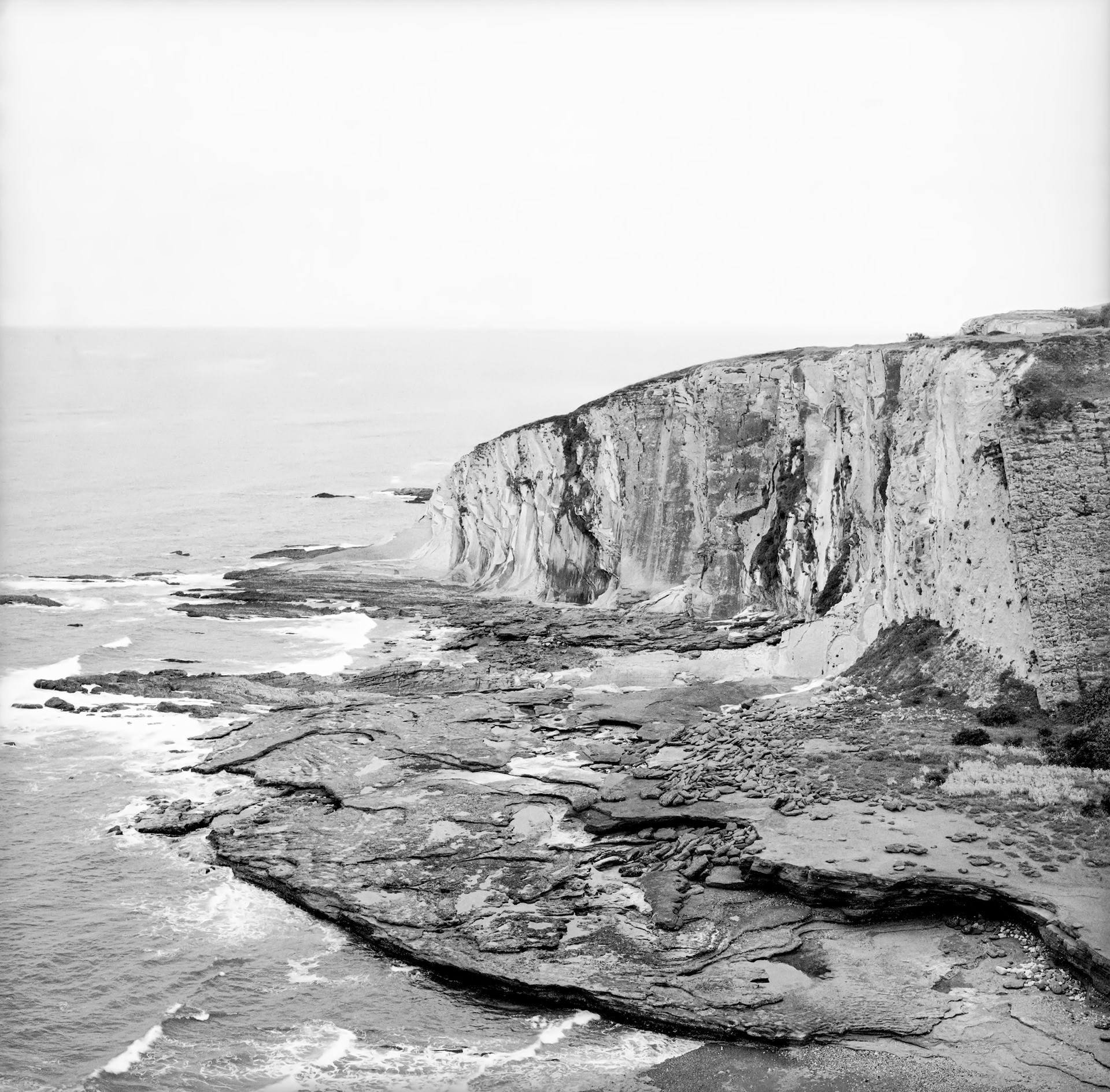
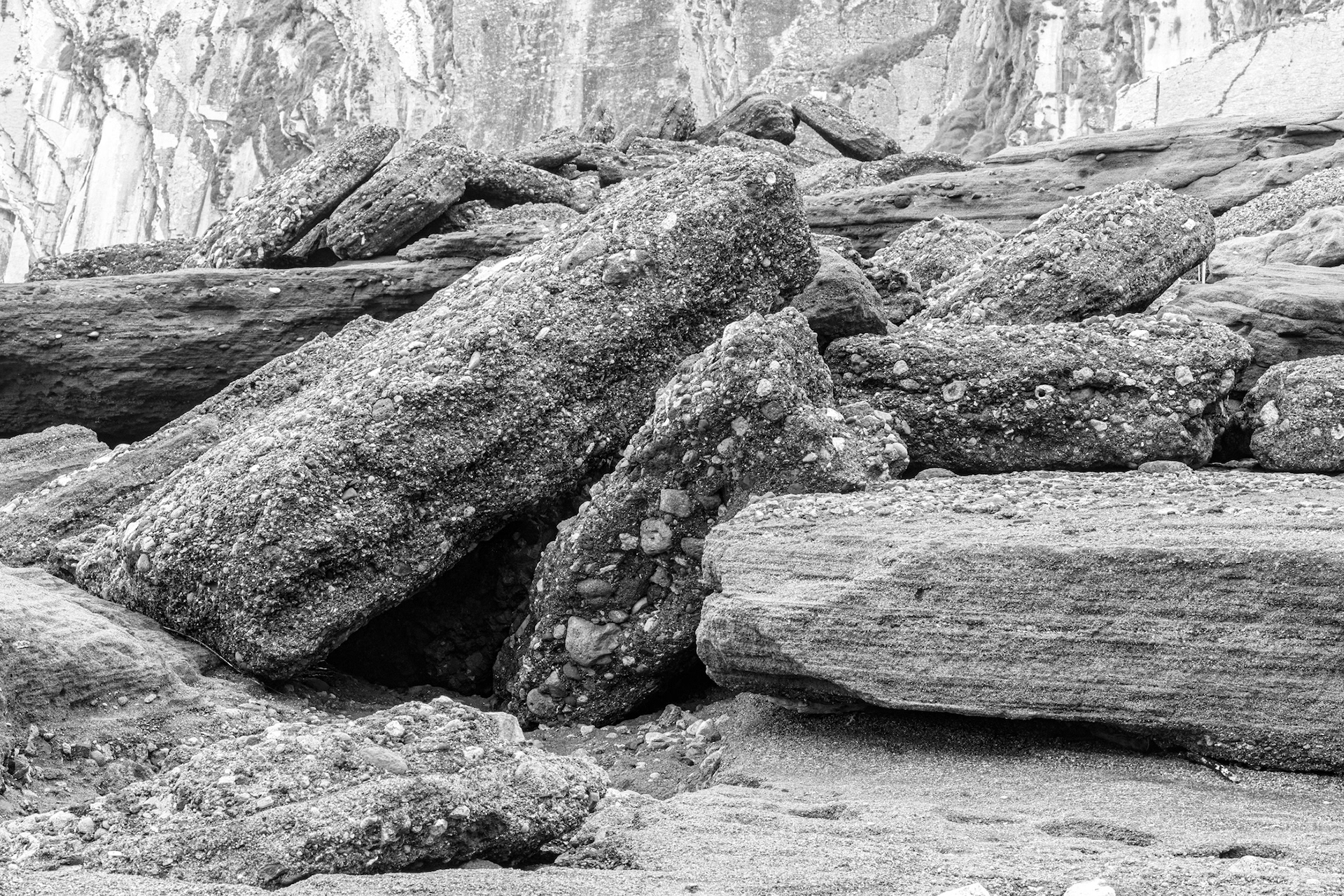
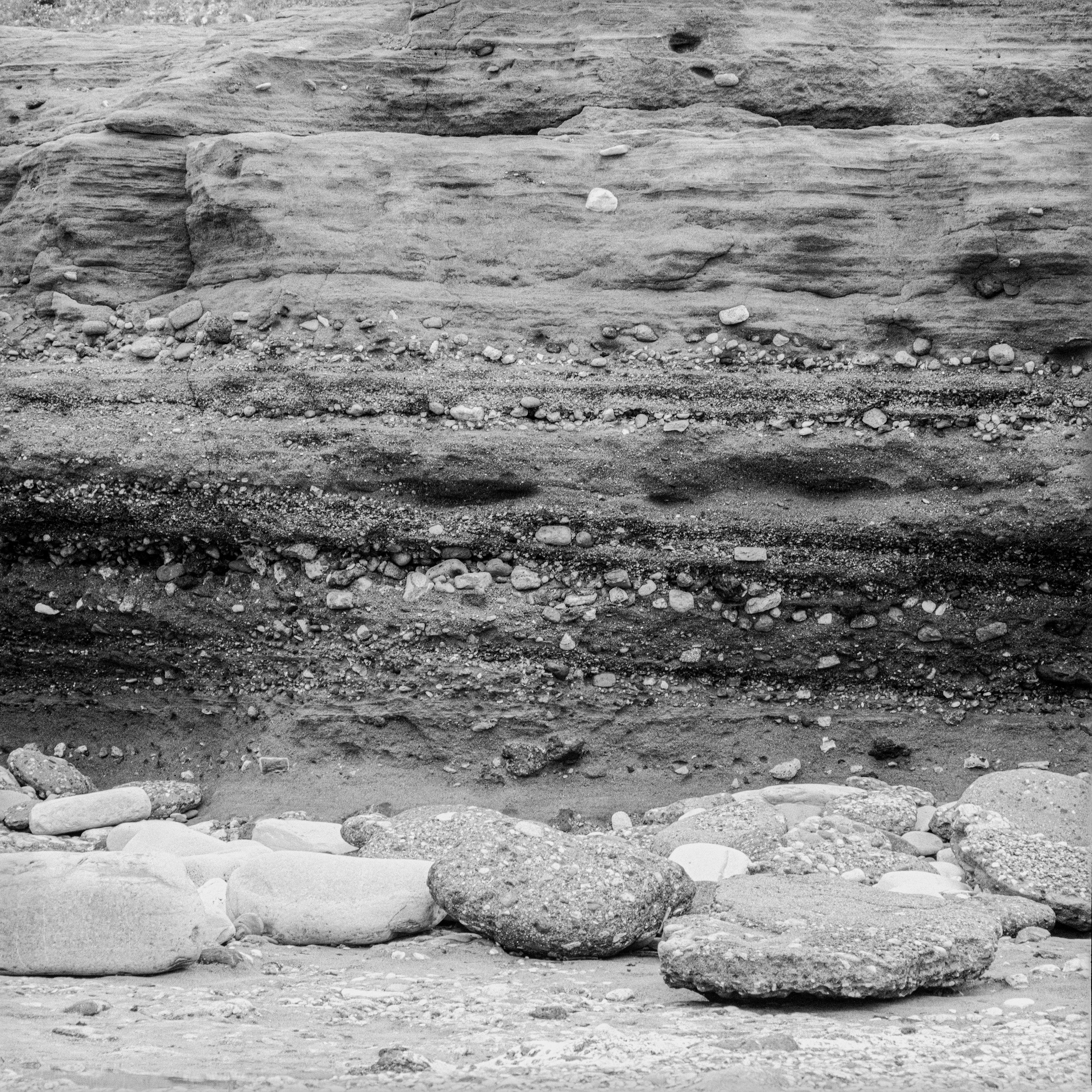
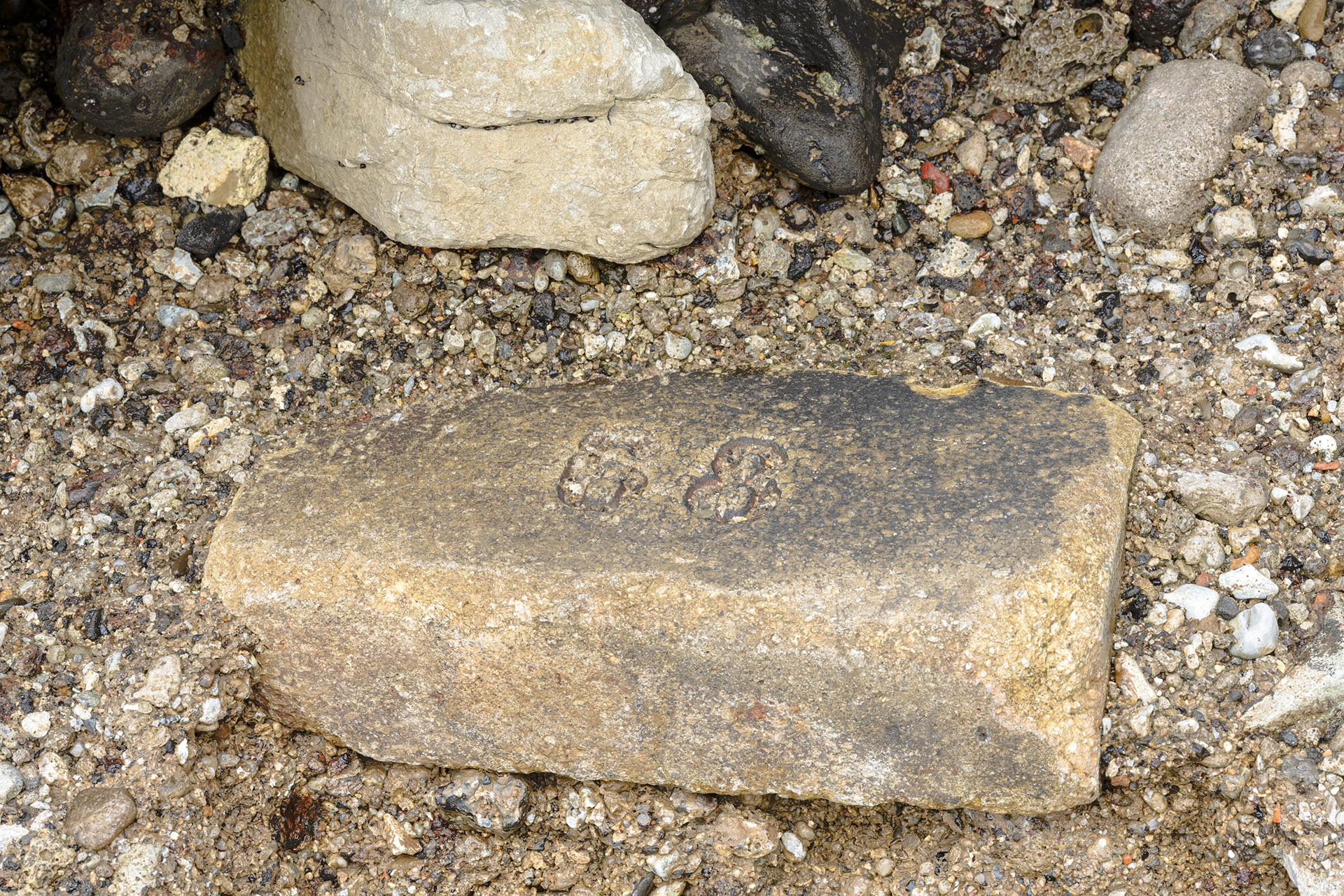
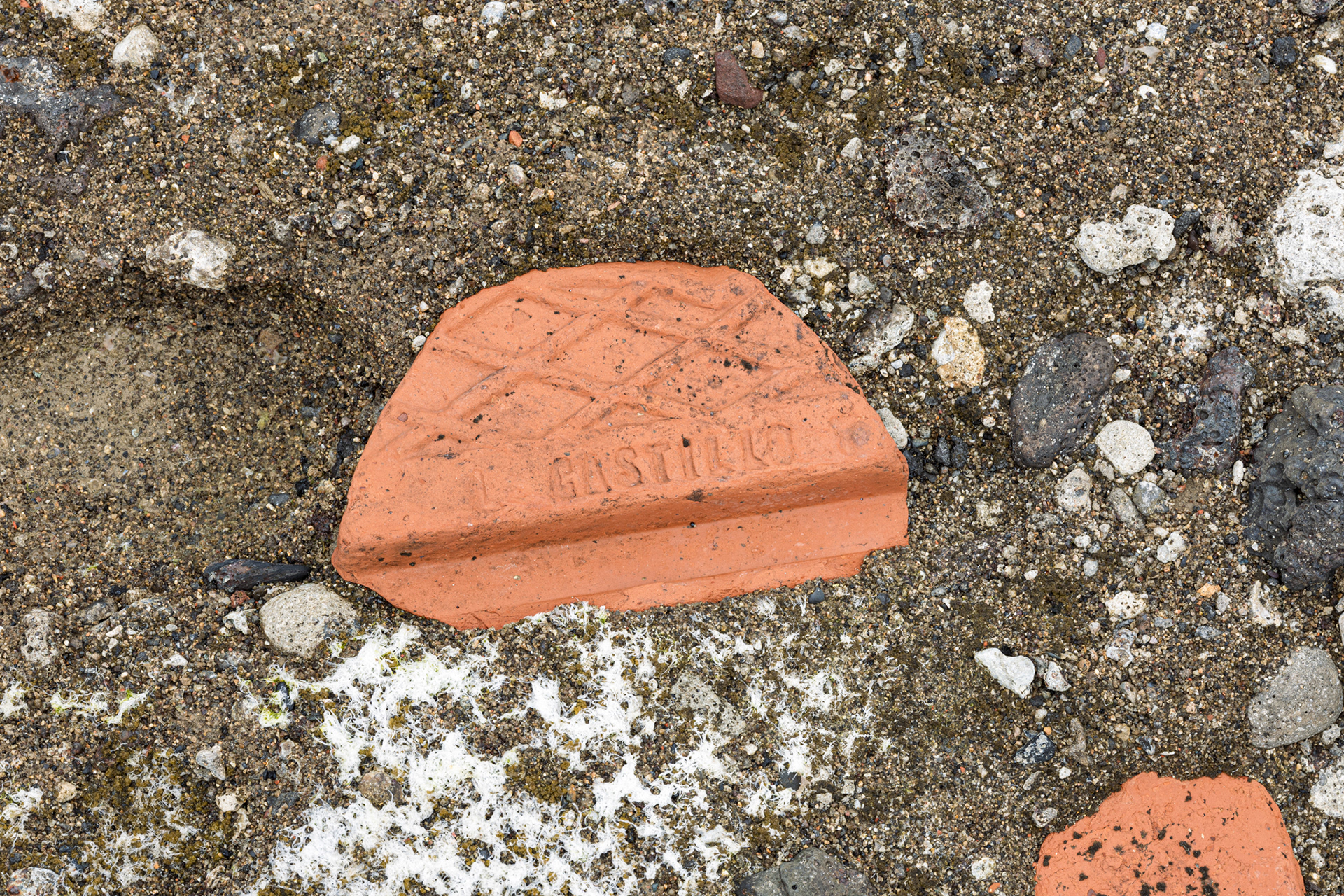
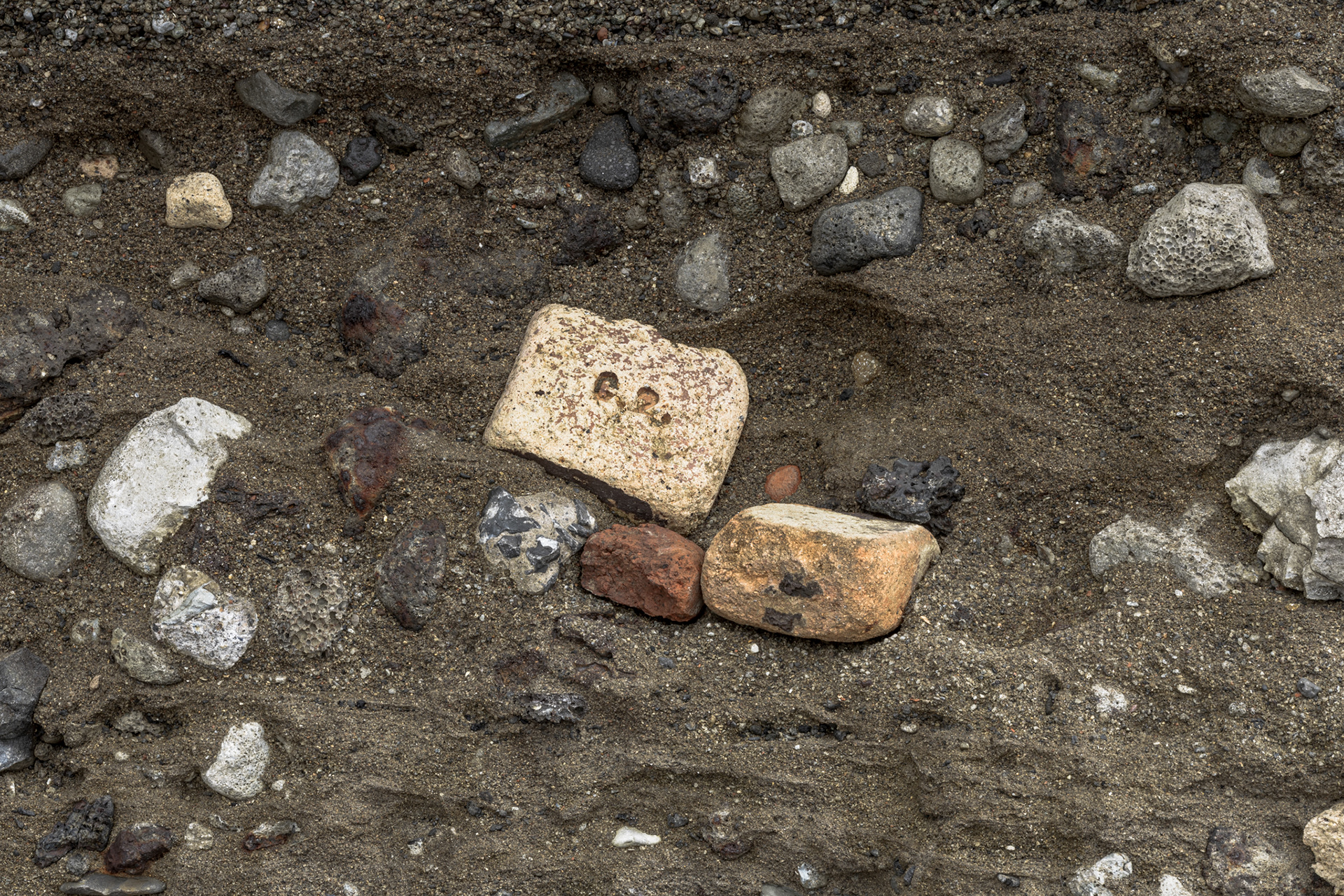
The Future of Our Shadows: A Geology of Our Fragility is a photographic and installation-based project that explores the impact of human activity on the environment through a visual reflection on the Anthropocene. The work focuses on the coastline of Tunelboca, where cemented residues of the technosphere have become embedded in the geological fabric of the beach. These remnants bear witness to the way human activity has reshaped the earth, positioning humanity as a central agent of geological transformation.
The materials visible on this beach originate from local steel, construction and mortar industries, mainly active between the 1920s and the 1970s. Once discarded into the sea, these industrial remnants were later redeposited along the coast, forming hybrid geological structures that blur the boundary between the natural and the artificial. Subject to the continuous action of the tides, these formations slowly disintegrate, echoing the fragility and impermanence of human interventions in the landscape.
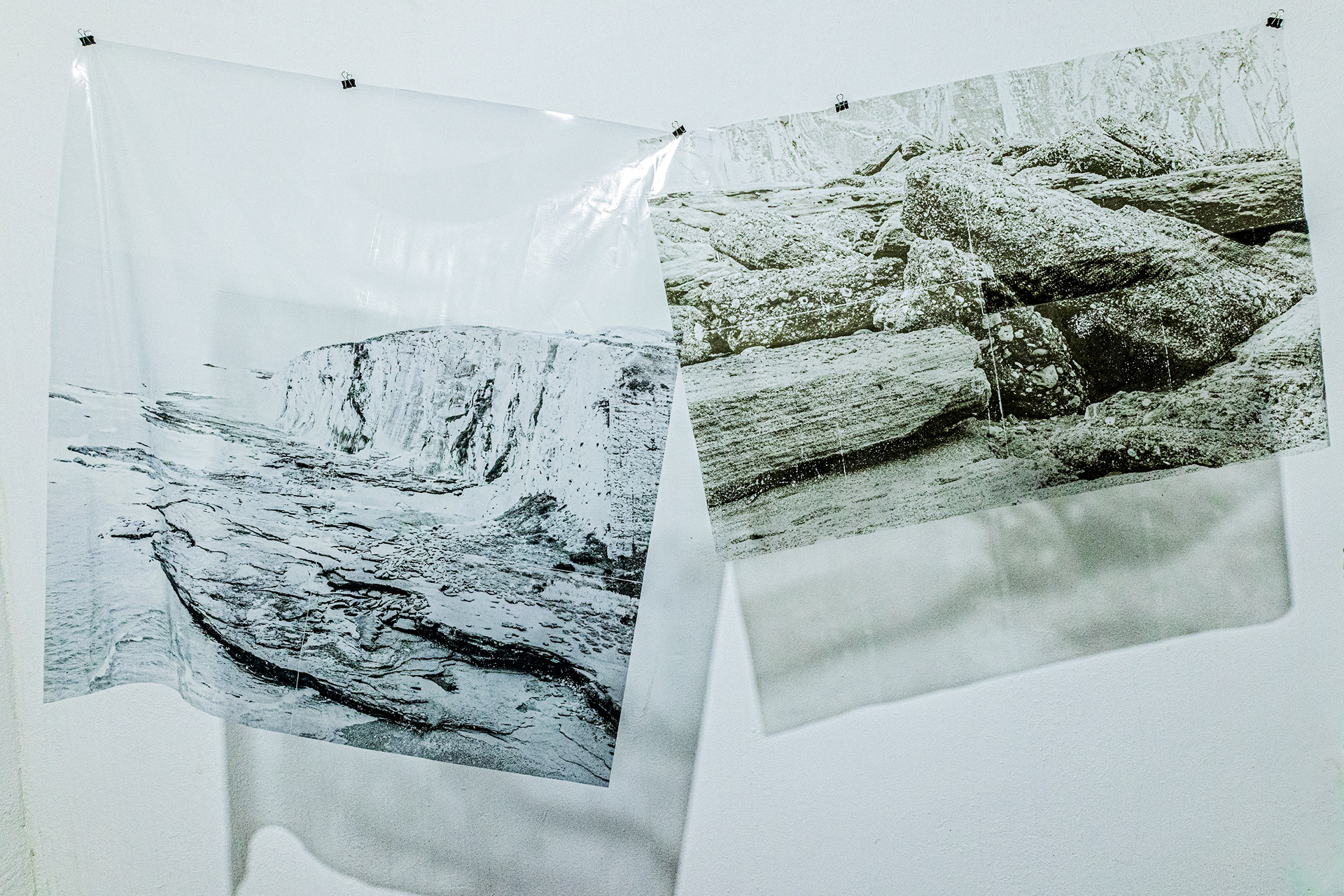
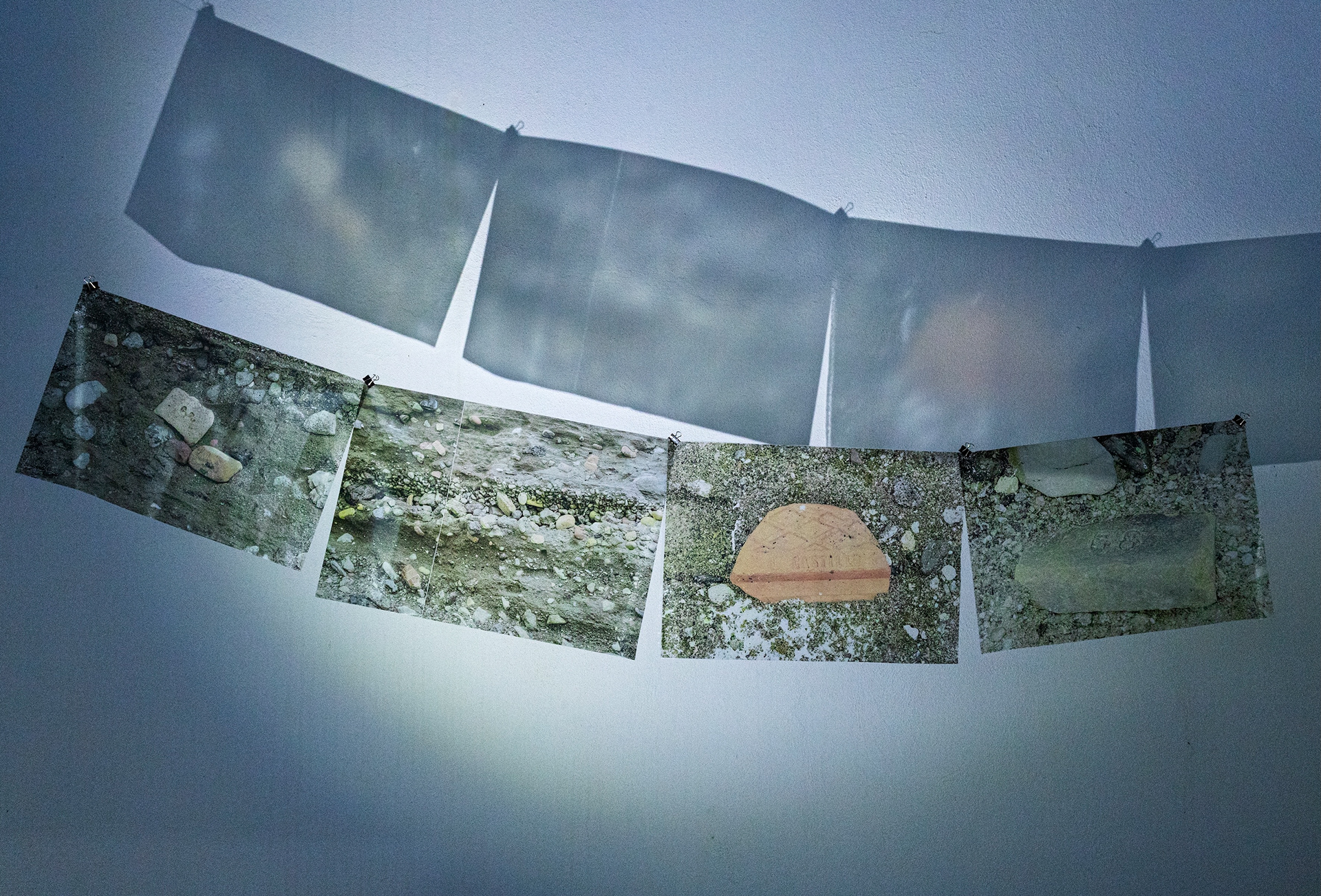
The photographs presented form the basis of an installation in which the images are transferred onto plastic supports. Plastic is chosen deliberately: it is a material closely associated with environmental degradation, yet it is also fragile and vulnerable despite its flexibility. This fragility contrasts with the apparent solidity of the cemented debris, creating a tension between permanence and decay.
By using semi-transparent materials, the shadowed areas of the images remain visible, allowing light and projection to play an integral role in the work. The decision to exhibit the pieces outdoors enables natural elements, particularly wind, to interact directly with the installation. This exposure reinforces the conceptual framework of the project, emphasising both the vulnerability of the environment and the instability of human structures within it.
Through this work, I seek to reflect on the traces we leave behind and to question the illusion of control embedded in industrial progress. The project invites viewers to consider the shared fragility of landscapes and bodies, and the long-lasting consequences of human action inscribed into the geological present.
El proyecto El futuro de nuestras sombras: una geología de nuestra fragilidad propone una lectura visual crítica del impacto de la actividad humana sobre el medio ambiente, origen de lo que los geólogos definen como un nuevo periodo geológico: el Antropoceno. En la playa de Tunelboca son visibles los restos cementados de la tecnosfera, que evidencian la transformación de la estructura geológica causada por la actividad humana como uno de los principales agentes de los cambios geológicos (Cearreta).
Más concretamente, se trata de restos procedentes de las industrias siderúrgica, de la construcción y de la fabricación de morteros de la zona, producidos especialmente entre las décadas de 1920 y 1970. Estos residuos fueron vertidos al mar y posteriormente depositados «contra los acantilados, formando falsos aterrazamientos eustáticos de arenas negras cementadas en la costa por el efecto de la deriva litoral» (Lugaresaresti Bilbao). Bajo la acción de las mareas, la playa se desintegra progresivamente, funcionando como una alusión a la fragilidad de nuestras propias acciones.
Las fotografías presentadas constituyen los documentos base a partir de los cuales he realizado una instalación de imágenes transferidas sobre plástico, un material fuertemente cargado de significado en relación con la protección del medio ambiente, pero también frágil, pese a su flexibilidad. Esta elección establece un contraste con la estructura monolítica de los residuos cementados. El soporte semitransparente permite que las zonas de sombra de las imágenes transferidas —y posteriormente proyectadas— permanezcan visibles. He optado por exponer las piezas en el exterior para permitir que el viento actúe directamente sobre ellas, un elemento que remite, una vez más, tanto a la fragilidad del medio ambiente como a la de nuestra propia actividad humana.
© Suzana Burlea, 2026. All rights reserved.